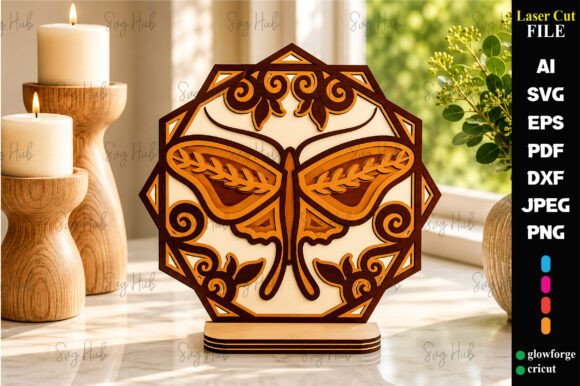
3D Lunar Moth Layered Laser Cut
When I first pulled up the file for 3D Lunar Moth Layered Laser Cut, my initial reaction wasn’t just about the visual appeal—it was about the structural integrity of the design. As a designer who reviews hundreds of embroidery files monthly, I look for that sweet spot where artistic flair meets technical feasibility. This design sits squarely in that zone, but with a twist: it is marketed as a laser cut template on a 35-inch by 35-inch artboard. This immediately raises questions about how it translates from a flat digital vector or a large-scale print into a tangible, stitched reality. For those of us working in the intersection of digital product sellers, craft business owners, and handmade shop owners, understanding this transition is critical.
First Impressions and Visual Mood
The Lunar Moth is a classic motif in the world of nature-inspired decor, often associated with whimsy, transformation, and delicate beauty. The "layered" aspect of this specific design suggests depth, which is a powerful tool in embroidery project execution. When you look at the layout, the wings are designed to catch light differently depending on the angle, creating a dynamic presence rather than a static image. This is particularly effective for home decor items like pillow covers or wall hangings where the piece can be viewed from multiple perspectives.
The mood created here is serene yet striking. It feels premium. If you are an Etsy seller looking to list a small shop product that stands out in a crowded feed, this design has the visual weight to do so. It doesn’t scream for attention with neon colors; instead, it whispers quality through its intricate wing patterns and layered composition. For a creative entrepreneur, this means higher perceived value without needing complex marketing copy to explain why the item is special.
Real-World Application: From Screen to Stitch
Let’s talk about real use. Imagine you are preparing a custom order for a client who wants a personalized gift for a baby shower. You might consider using this design on a soft muslin blanket or a high-quality cotton onesie. However, because this is originally a laser cutting template, you must adapt your approach. In embroidery terms, you are likely looking at converting these layers into distinct stitch regions. The outer layer might serve as an outline or a satin stitch border, while the inner layers could be filled with fill stitch or left as negative space if you are doing appliqué.
I tested the concept mentally on a tote bag design. A canvas tote provides a sturdy surface that can handle the density required for detailed moth wings. The contrast between the natural fiber texture and the smooth threads of the moth would create a beautiful tactile experience. Customers love products they can feel. If you are selling custom apparel, such as a sweatshirt embroidery piece on the back or chest, this design offers a focal point that draws the eye. It works well for holiday embroidery too, perhaps as part of a seasonal collection featuring moths or night-themed creatures.
Another strong candidate is the embroidered patch. Because the design is layered, it can be embroidered onto a backing fabric, stabilized properly, and then cut out (or kept as a full embroidery) to be ironed or sewn onto denim jackets, caps, or hats. This adds a rugged yet elegant touch to craft fair products that need to look durable and professional.
Technical Considerations and Fabric Choices
Not every fabric plays nice with intricate designs. With 3D Lunar Moth Layered Laser Cut, you need to be mindful of your material selection. On textured fabrics like heavy tweed or loose-weave linen, the fine details of the moth’s antennae and wing veins might get lost. Similarly, on stretchy fabrics like jersey knits used for t-shirts, you risk distortion unless you use a high-quality tear-away or cut-away stabilizer. The hoop size matters immensely here; if the design is scaled down too much, you lose the "layered" effect that makes it unique.
Dark fabrics present another challenge. While a dark background can make white or silver thread pop, it requires careful thread color selection. I recommend testing your thread colors on scrap fabric before committing to the final product. A common mistake is choosing a thread that is too similar in tone to the fabric, resulting in a muddy appearance. Conversely, going too high-contrast can sometimes look harsh unless that is the specific aesthetic you are aiming for.
If you are planning to use this for commercial embroidery on items that will undergo frequent washing, such as aprons or kitchen towels, ensure that your stitch density is appropriate. Too much density can cause puckering over time, especially if the stabilizer isn't removed cleanly. Always inspect small details after the first test run to confirm that the machine handled the transitions between different stitch types smoothly.
Strategic Advice for Sellers and Makers
For those of you running a digital embroidery file store or selling physical goods, presentation is key. Create printable mockups that show the design on various backgrounds. Compare light and dark fabric backgrounds to demonstrate versatility. Show the design on a pillow cover, on a cap, and perhaps even as a standalone art piece if the scale allows. This helps buyers visualize the finished product in their own homes or wardrobes.
Transparency builds trust. If this design originated as a laser cut template, be clear about how it has been adapted for embroidery. Did you convert the vector paths into stitch lines? Did you simplify certain areas for better stitching performance? Sharing these insights can enhance your brand consistency and professionalism. Buyers appreciate knowing that a designer has thoughtfully considered the practical aspects of production.
Also, remember to check licensing. Even though the description mentions a 35x35 inch artboard, verify whether you have the rights to sell finished products made with this design. Some templates are for personal use only, while others allow commercial application. Confirming this before you start producing inventory protects your craft business from potential legal issues.
Final Verdict
3D Lunar Moth Layered Laser Cut is more than just a pretty picture; it is a versatile asset for any designer willing to put in the preparation work. It shines in personalized gifts, boutique branding, and nursery decor where elegance and detail are prized. By paying attention to fabric choice, stabilization, and thread contrast, you can transform this digital concept into a stunning finished product that delights customers and elevates your portfolio. Whether you are adding it to your design assets library or crafting one-off pieces for clients, this design offers a compelling blend of artistry and marketability.